



Key highlights
- Digital gold is a claim on physical 24-karat gold kept in a vault, not just a number on your screen.
- An independent custodian, often under a trust or trustee structure, is meant to hold the metal, separate from the app company.
- Ring-fencing means your gold should not count as the platform's own asset if the company runs into trouble.
- Vaults usually carry insurance and undergo audits, but these protections come from contracts and practice, not a dedicated law.
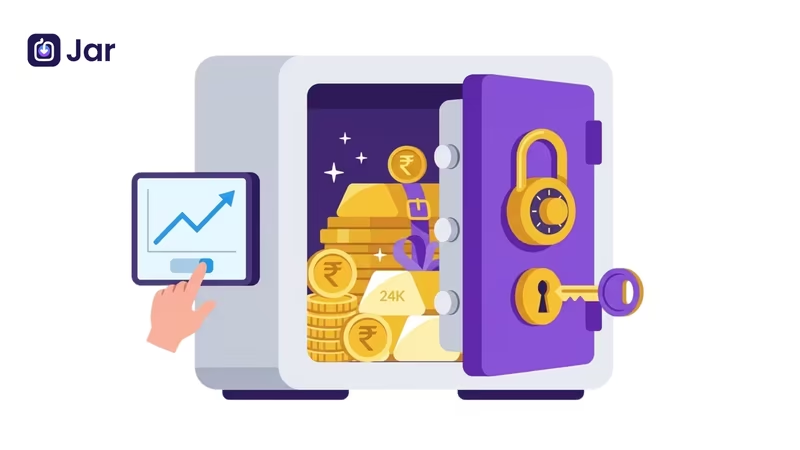
- Apps such as Jar describe their own custody setup, including a vault partner, an insurer and an independent trustee, and you should verify each claim.
- Before you buy, check the custodian's name, the insurance terms, the audit disclosures and the redemption options.
- Buying is near-instant, while selling can take a day or two to settle.
- Costs include 3% GST and a buy-sell spread, so the price must rise before a quick trade breaks even.
- Digital gold is not regulated by SEBI or RBI, so the platform's structure matters more.
- Regulated lenders do not accept digital gold as loan collateral, so you would need to convert it to physical gold first.
Imagine you have been putting ₹500 a month into digital gold for three years. One day you open the app, see a healthy balance, and a question quietly forms: where is this gold, really? Who looks after it, and what happens to it if the company behind the app runs into trouble? These are the right questions.
Digital gold has become a popular way to start saving in small amounts, with some apps accepting purchases as low as ₹10 or ₹50. But behind that simple screen sits a chain of parties: the app, a custodian, a vault, an insurer and sometimes a trustee.
Understanding who holds your digital gold, what you legally own and how it is protected tells you far more than the app's dashboard. This guide explains each link in that chain, shows where the protections end, and uses Jar as a real example of how one platform describes its setup.
Quick Snapshot on Who Holds Your Digital Gold
| Topic | What to Know | Why It Matters |
| What you buy | A claim on 24-karat gold stored in a vault | You own a proportional quantity of metal, not an app balance |
| Custodian | An independent party that holds the gold for buyers | Keeps the metal away from the platform's own business |
| Ring-fencing | Gold should be held in trust, off the company's books | Platform trouble should not pull your gold into its liabilities |
| Insurance | Vaults commonly carry cover against theft and damage | Protects the stored metal, but read the policy's scope |
| Audits | Checks that stored gold matches customer holdings | Confirms the grams on screen match the grams in storage |
| Regulation | Digital gold is not regulated by SEBI or RBI | Protection depends on contracts and structure |
| Costs | 3% GST plus a buy-sell spread | Gold must rise before a quick round trip breaks even |
| Selling | Proceeds usually settle within a day or two | Buying is instant; exits take slightly longer |
| Loans | Regulated lenders do not accept digital gold as collateral | Convert to physical gold before pledging |
What Is Digital Gold?
Digital gold is an online way to buy 24-karat gold without taking physical delivery. When you buy, the platform arranges for an equivalent weight of physical gold to be purchased and stored in a secure vault. You get a digital record of that ownership, which you can track in the app, sell back or redeem as coins or bars.
The appeal is accessibility. You can buy a fraction of a gram, you do not need a locker or a jeweller, and you can set up automatic recurring purchases. The trade-off is that you are relying on a chain of parties to keep the metal safe and accounted for. That chain is what this article is about.
For a wider view of how the pieces fit together, read How Digital Gold Works: The Complete Behind-the-Scenes Guide.
Who Holds Your Digital Gold? Custody, Ownership and Insurance Explained
Custody is the arrangement that answers one question: who is responsible for the gold behind your balance? A sound setup separates three roles. The custodian stores the metal, the insurer covers the stored stock, and an independent party checks that the gold in the vault matches what customers are owed.
The Custodian and Trustee
The custodian is an independent organisation that holds the physical gold for the benefit of buyers. In many structures, a trustee sits alongside the custodian and supervises the arrangement on customers' behalf. The app handles the customer experience, while the custodian keeps the metal.
Before trusting a platform with regular purchases, ask it to name the custodian and any trustee. A provider that avoids naming them is leaving a basic question unanswered. Once you have the names, look them up independently.
Ring-Fencing: Why Your Gold Should Stay Separate
Think of a bank locker. The bank looks after the contents, but the items belong to the customer, and the bank's creditors cannot claim them. Ring-fenced digital gold follows the same logic. The gold allocated to you should sit outside the platform's own balance sheet, so the company's debts or failure should not reach it.
This is the most important feature to verify. A platform may say it "holds gold for you," but the real test is whether the metal is held in trust and kept separate from the company's assets. The custodian agreement or terms of service should spell this out.
Vault Security and Audits
Professional vaults typically combine several safeguards: continuous surveillance, controlled access where no single person can move stock alone, fire and intrusion protection, and insurance on the stored metal. Each movement in or out is logged.
Audits are the second layer of assurance. An independent check can compare the total gold in storage with the total of customer balances. Some platforms publish their reconciliation reports and others do not. Since audits are not guaranteed by a dedicated law, a published report is a useful sign of transparency.
To compare how physical gold is kept at home, in a bank locker or in a private vault, see Where to Keep Your Gold: Home vs. Bank Lockers vs. Private Vaults.
Who Owns the Gold in Your Account?
Owning digital gold does not usually mean having a specific coin or bar with your name on it. You hold a beneficial entitlement to a stated quantity of physical gold, tracked on the platform's records and held by the custodian.
The legal description can differ between providers. Some describe the arrangement as a trust, others as a contractual right. The practical questions are the same: can you redeem, can you sell, and is the metal separate from the platform? Your proof of ownership is the purchase invoice and any holding statement. Each should show the date, the exact weight in grams, the price per gram, the total paid and a unique transaction reference.
What Insurance Covers, and What It Does Not
Insurance on a digital gold vault generally protects the stored metal against theft and damage. That is the pool of gold backing your balance, and it matters.
Insurance does not guarantee that your app balance is risk-free. It does not cover poor management, processing delays or disputes over the terms of your holding. Check the insurer's name, the policy's scope and whether the cover applies to the full stored quantity. Remember that a policy is only as good as
the custody and record-keeping behind it.
How Jar Describes Its Digital Gold Custody
Jar is a digital gold savings app in India, operated by Changejar Technologies Private Limited. Users can save daily, weekly or monthly in 24-karat gold, and the app also offers instant savings and jewellery purchases through its Nek platform. The company's website describes a layered setup that is useful to walk through as a real example of the checklist above.
Storage partner. Jar says the gold bought through its app is kept in vaults managed by Brink's, a global secure-logistics company.
Insurance. Jar states that each user's holding is insured by ICICI Lombard. Ask for the policy wording to confirm what the cover includes and how claims work.
Trustee and audits. Jar names Vistra as its appointed trustee and says Vistra conducts independent audits to check that the physical gold matches its records. Jar also says it runs its own daily reconciliation between stored gold and its database.
Purity and sourcing. Jar says it sells 99.9% pure gold and sources it from accredited bullion traders.
Customer funds. Jar says customer money is held in separate escrow or custodian accounts, apart from its operating funds.
Entry point. Jar's website lists a ₹10 daily starting amount, with weekly and monthly plans starting at ₹50 and ₹100. Plans and minimums can change, so confirm them in the app before you start.
These are the company's own statements. A balanced reader should verify each one: look up the named custodian, trustee and insurer, read the terms, and check whether audit reports are available. The fact that a platform names its partners is a good start, but verification is what turns a claim into a fact.
Buying, Selling and Redeeming Digital Gold
The purchase process is designed to be quick. You choose an amount in rupees or grams, review the live price and pay through UPI, net banking or a card. The platform then allocates the matching weight of gold to your account, usually within moments.
Selling works in reverse. You place a sell order at the prevailing rate, the platform de-allocates the gold and the proceeds are credited to your bank account. Settlement commonly takes one to two working days, because the metal has to be released before money moves.
If you want physical gold, many platforms let you redeem once your holding crosses a minimum weight, commonly around 0.5 or 1 gram. Delivery adds making and delivery charges, and the piece should come with purity certification. Jar also offers jewellery and coins through its Nek platform, which is a separate purchase from your digital gold balance.
Costs and Tax to Know
The headline gold price does not show the full cost of digital gold. Three elements matter most.
GST of 3% applies to the purchase value. The buy-sell spread is the difference between the price you pay and the price you receive when selling. It typically runs around 2 to 3 percent and covers the platform's margin and operating costs. Some platforms offer free storage for an initial period, commonly around five years, after which an annual fee may apply.
Because of GST and the spread, the gold price must rise several percent before a quick buy-and-sell breaks even. Digital gold tends to suit patient, regular saving rather than short-term trading.
On tax, digital gold is generally treated like physical gold. Holdings sold within 24 months create short-term gains, taxed at your income slab rate. Holdings kept longer than 24 months attract long-term capital gains tax at 12.5% without indexation. Tax rules can change, so confirm the current position with a tax professional.
For comparisons of regular saving routes, see Gold SIP vs Mutual Fund in 2026 and RD vs Gold Scheme 2026.
How to Spot a Fake Digital Gold App
Because digital gold is popular, fraudsters often imitate well-known brands. A few habits protect you.
Legitimate platforms do not ask for your OTP, PIN or password over a phone call, WhatsApp message or unknown link. Never share these details, never give remote access to your phone and never make an investment on the strength of an unsolicited message.
Jar warns users about impersonators who copy its name, logo and app, and it asks anyone who spots one to report it. Whatever platform you use, download the app from its official store listing, check the website address carefully and verify any phone number or email against the platform's official website before you act.
What Happens If a Platform Shuts Down?
If the custodian holds the gold in trust and keeps it separate from the platform's assets, a closure should not erase your claim. The custodian and trustee framework is designed to manage redemption or transfer in that scenario.
In practice, expect delay. Processing may slow, communication may become patchy and resolution can take time. The gold itself should survive, but getting access may need patience and paperwork.
You can lower the risk with a few habits. Download invoices and statements regularly rather than relying only on the app. Note the custodian's and trustee's names. Keep your contact details updated with the platform. And consider converting a large balance into physical coins or hallmarked jewellery from time to time, because physical possession is the one arrangement that needs no third party.
Digital Gold vs Gold Loans
A common assumption is that you can borrow against digital gold the way you would against jewellery. Under current rules for regulated lenders, that does not work. Digital gold balances, Gold ETFs and similar gold-linked instruments are not accepted as loan collateral. Eligible collateral is physical gold in specified forms, such as jewellery of a set purity and certain bank-issued coins, within limits.
So if you need credit, the usual route is to convert digital gold into physical gold and then pledge that gold under the standard rules. Jar's website lists a gold loan calculator, so if you use any loan product linked to an app, check directly how it treats digital gold holdings before you rely on it.
Digital Gold vs Gold ETFs
Gold ETFs are mutual fund units listed on a stock exchange. They are regulated under the securities framework and bought through a demat account. Digital gold is bought directly on a platform, needs no demat account, works at much smaller amounts and carries contract-based protections rather than regulatory ones.
Both track the gold price, but the costs differ. ETFs charge fund expenses and do not carry the 3% purchase GST. Digital gold carries GST and a buy-sell spread. The choice comes down to whether you value regulatory oversight or convenience and small ticket sizes.
For a beginner-friendly explainer on ETFs, see What is a Gold ETF? Complete Beginner’s Guide.
Digital gold can be a practical way to build a gold holding in small steps. When it is structured well, the metal is held by an independent custodian, stored in an insured vault, kept separate from the platform's assets and checked through audits. Knowing who holds your digital gold, what your balance represents and how it is insured puts you in a stronger position.
The limits are real, too. Digital gold is not regulated by SEBI or RBI, regulated lenders do not accept it as loan collateral, and costs include GST and a buy-sell spread. Apps like Jar describe their custody setup, including a vault partner, an insurer and an independent trustee, but those are claims to verify, not guarantees. Read the custodian agreement and insurance terms, keep your statements, and treat physical gold as a fallback whenever you want certainty without a counterparty.
Disclaimer: This article is for general information only and does not constitute legal, tax or financial advice. Rules, rates, minimums and platform terms can change. Please verify details with the provider and a qualified professional before making any decision.
Frequently Asked Questions
Who holds my digital gold?
An independent custodian is meant to hold the physical gold on behalf of buyers, often under a trust or trustee arrangement. The app company manages your account, but the metal should sit with the custodian in an insured vault.
Is Jar digital gold safe?
Jar describes a setup with a vault partner (Brink's), insurance (ICICI Lombard), an independent trustee (Vistra) and regular audits. Verify these details yourself, read the terms and check the insurance scope before relying on them. As with any digital gold product, it is not regulated by SEBI or RBI.
Who insures digital gold in India?
It depends on the platform. Jar states that its holdings are insured by ICICI Lombard. Other platforms may use different insurers, so check each provider's disclosures.
What is the minimum amount to buy digital gold?
It varies by platform. Jar lists ₹10 for daily savings, with weekly and monthly plans starting at ₹50 and ₹100. Check current minimums in the app.
Can I get a loan against digital gold?
Not from a regulated lender under current rules. Digital gold is not accepted as collateral. You would generally need to convert it into eligible physical gold first.
Is digital gold regulated in India?
Not by SEBI or RBI as of now. Protection depends on the platform's custody structure, insurance, audits and contract terms.
What should I do if someone asks for my OTP about digital gold?
Do not share it. Legitimate platforms do not ask for OTPs, PINs or passwords over calls, WhatsApp or unknown links. Verify any contact through the platform's official website and report suspicious activity.