


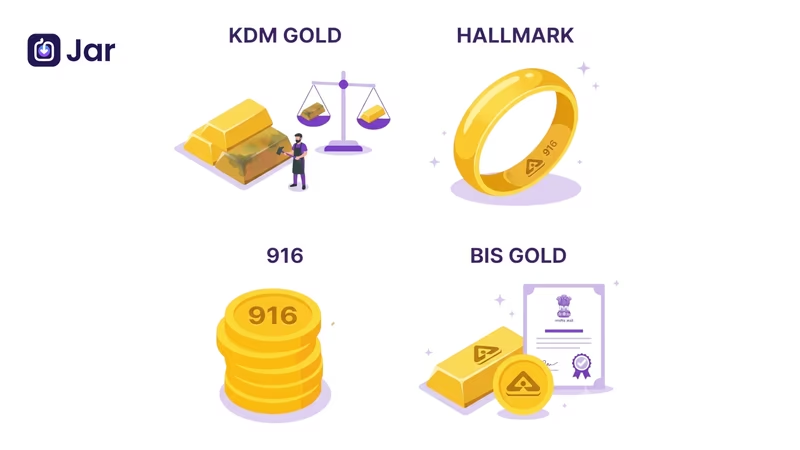


Walk into any gold jewellery shop in India and you'll hear terms like KDM, 916, hallmark, and BIS thrown around as if everyone already knows what they mean.
Most buyers nod along and trust the jeweller, but that trust has cost people real money and, in the case of KDM gold, real health consequences.
In this guide, you'll learn exactly what KDM gold is, why it was banned, what hallmark 916 gold means, and how to protect yourself every time you buy jewellery.
What Is KDM Gold and Where Did It Come From?
KDM gold is a gold alloy where cadmium, spelt "Kadmium" in German, which is where the name comes from, was used as a soldering agent to fuse pieces of jewellery together during manufacturing.
The traditional composition was roughly 92% gold and 8% cadmium. Cadmium was chosen for a very practical reason: its melting point is just 321°C, compared to gold's 1,064°C.
That low melting point made it ideal for joining gold components without melting or warping the gold itself.
Before KDM gold existed, Indian jewellers used a goldcopper alloy for soldering, with compositions sometimes as low as 60% gold and 40% copper. That high copper content noticeably diluted purity.
KDM gold solved this by keeping gold content high while still making intricate, layered designs possible — the kind of temple jewellery, filigree work, and Kundan sets that Indian craftsmanship is famous for.
For decades, it was the workshop standard. Then researchers started asking what the cadmium was doing to the people wearing and making these pieces.
Why KDM Gold Was Banned in India: The Health Risk Nobody Talked About
Cadmium is a heavy metal toxin. The World Health Organisation classifies it as a Group 1 carcinogen, meaning there's confirmed evidence it causes cancer in humans. Prolonged exposure is linked to kidney damage, bone density loss, respiratory disease, and an elevated risk of lung cancer.
For consumers wearing KDM gold jewellery daily — bangles, rings, necklaces — skin absorption of cadmium was a documented concern. But the greater risk fell on craftsmen: jewellers spending hours each day soldering in poorly ventilated workshops, inhaling cadmium fumes with no protective equipment.
Studies in the early 2000s found cadmium levels in KDM jewellery exceeding BIS limits.
Workers in jewellery manufacturing clusters showed elevated cadmium in blood and urine tests.
The Bureau of Indian Standards responded by explicitly prohibiting hallmarking on cadmium-soldered jewellery under clause 6.2 of BIS standard IS 1417:1999. The Indian government then banned cadmium solder in jewellery manufacturing altogether.
KDM gold, as it was traditionally made, became illegal in India.
> What replaced it?
Modern jewellery workshops now use cadmiumfree solders — typically blends of gold, silver, copper, and zinc — or laser welding, which eliminates solder entirely. These alternatives cost slightly more, but they don't come with a toxicology report.
What Is Hallmark 916 Gold? Breaking Down the Numbers
916 gold is 22-karat gold. The "916" stamp means the piece contains 91.6% pure gold, with the remaining 8.4% made up of other metals usually copper, silver, and zinc.
These added metals aren't a compromise; they're necessary. Pure 24karat gold is too soft to hold intricate jewellery shapes, so alloying it makes the final piece durable enough to wear.
Hallmark gold is a certification, not a type of gold. When a piece is hallmarked, a BIS-approved Assay and Hallmarking Centre has independently tested and verified the gold content, then stamped the proof directly onto the jewellery.
A valid modern BIS hallmark contains five elements: the BIS logo (two interlocking triangles), the purity mark (916, 750, 999, etc.), the Assay Centre's identification mark, the jeweller's unique mark, and the HUID — a sixdigit alphanumeric code introduced in 2021 that's unique to each piece.
916 Gold vs 999 Gold: Which Should You Buy?
If you're buying jewellery to wear, 916 is the practical choice. If you're buying gold purely as an investment, 999 bullion gives you maximum gold content and a cleaner pricing benchmark.
KDM Gold vs Hallmark 916 Gold: The Direct Comparison
This is the comparison most jewellers won't walk you through clearly.
| Attribute | 916 Gold (22K) | 999 Gold (24K) |
| Gold Purity | 91.6% (8.4% alloyed metals like copper/silver) | 99.9% (Pure gold) |
| Hardness & Durability | Durable, scratch-resistant; suitable for daily jewellery | Extremely soft and malleable; deforms easily |
| Common Uses | Ornaments, gemstone settings, intricate jewellery | Gold coins, bullion bars, digital gold, investments |
| BIS Hallmark Marking | 22K916 | 24K999 |
| Composition | 22 parts gold + 2 parts alloy metals | 24 parts pure gold |
| Market Price | ~8% lower than 24K per gram | Highest market rate per gram |
The gold purity in both is similar on paper — around 91.6–92%. The difference is everything else: legality, safety, verifiability, and what you can actually do with the piece if you want to sell it later.
If a jeweller today is offering you "new KDM gold," ask specifically about the solder composition. They may be using the term loosely as informal shorthand for highpurity gold — a habit that stuck even after the ban. Or they may be selling something that shouldn't be on the market. Either way, you deserve a direct answer.
How to Verify a BIS Hallmark Before You Buy
Don't take a jeweller's word for it. Here's how to verify independently.
Physical check: Look at the stamp on the piece itself. A valid hallmark includes the BIS logo, the purity number (916, 750, etc.), the Assay Centre mark, the jeweller's mark, and the sixdigit HUID code. If any of these are missing, ask why before buying.
Digital verification: Download the BIS Care app (available free on Android and iOS). Enter the HUID number from the jewellery. The app will pull up verified details for that specific piece — the jeweller's registration, the purity, and the hallmarking centre that certified it. This takes about 30 seconds and costs nothing.
If the hallmark seems fake: Take the piece to an independent BISapproved Assay Centre for testing. The fee is minimal, and the report is legally valid documentation of the jewellery's actual gold content. You can also file a complaint through the BIS helpline at 1800114566 or the National Consumer Helpline at 1915.
Selling hallmarked jewellery with fraudulent purity markings is a criminal offence under the BIS Act 2016, punishable by fines and imprisonment.
How to Identify Old KDM Jewellery at Home
Older pieces — anything bought before roughly 2005–2010 — may well be KDM gold. Here's how to approach it.
Look at the stamps. KDM jewellery was sometimes directly stamped "KDM" or "KDM 916." A piece with a 916 or 22K stamp but no BIS logo and no HUID was likely made before the current hallmarking system and could be cadmiumsoldered.
For a definitive answer, take the piece to a BISapproved Assay Centre. They can test the solder joins for cadmium. This matters especially if you're planning to melt the jewellery down or have it redesigned — craftsmen working with cadmiumcontaining pieces need to take protective precautions.
For resale, old KDM jewellery without BIS hallmarking typically fetches a lower price than certified 916 gold. Buyers and jewellers will discount it to account for the uncertainty around purity and the lack of independent verification.
The difference between KDM gold and hallmark 916 gold comes down to three things: safety, legality, and verifiability. KDM gold was a practical solution that turned out to carry real health risks — and India's regulators acted on that evidence. Hallmark 916 gold, certified by BIS, is the standard you should be buying to.
Before you hand over money for any gold piece, do three things: check the physical hallmark stamp for all five components, verify the HUID on the BIS Care app, and ask the jeweller directly about the solder used in the piece. A reputable jeweller will answer without hesitation.
Gold is one of the most emotionally and financially significant purchases most Indian families make. You deserve to know exactly what you're buying — and now you do.
FAQ: KDM Gold, 916 Gold, and Hallmarking
What is the full form of KDM gold?
KDM stands for Kadmium — the German spelling of cadmium. It refers to the cadmium that was used as a solder in gold jewellery manufacturing, giving the alloy its name.
Is KDM gold real gold?
Yes, the gold in KDM jewellery is real. The issue was never the gold itself — it was the cadmium used to join pieces together. KDM gold typically contains around 92% genuine gold. The problem is the toxic solder and the fact that it can't be legally sold as new jewellery in India today.
What is the difference between KDM gold and hallmark 916 gold?
KDM gold used cadmium as a solder, is now banned in India and cannot receive BIS hallmarking. Hallmark 916 gold contains 91.6% gold with safe, nontoxic alloy metals, is independently certified by BIS, and is the legal standard for jewellery sold in India today.
Can I still sell my old KDM gold jewellery?
Yes, but expect a lower price. Without BIS hallmarking, buyers can't independently verify purity, so they'll typically apply a discount. You can have it tested at an Assay Centre to get a certified purity reading, which may help with resale value.
What does the HUID number on my jewellery mean?
HUID stands for Hallmark Unique Identification. It's a sixdigit alphanumeric code introduced by BIS in 2021 and stamped on every hallmarked piece. You can enter it in the BIS Care app to verify the jewellery's certified purity and the jeweller who sold it.
Which gold is best for buying jewellery in India — 916 or 999?
For jewellery you plan to wear, 916 (22 karat) is the better choice because it's hard enough to hold detailed shapes. 999 (24 karat) is pure gold but too soft for most jewellery — it's better suited for coins, bars, and investment purposes.