



Key Highlights at a Glance
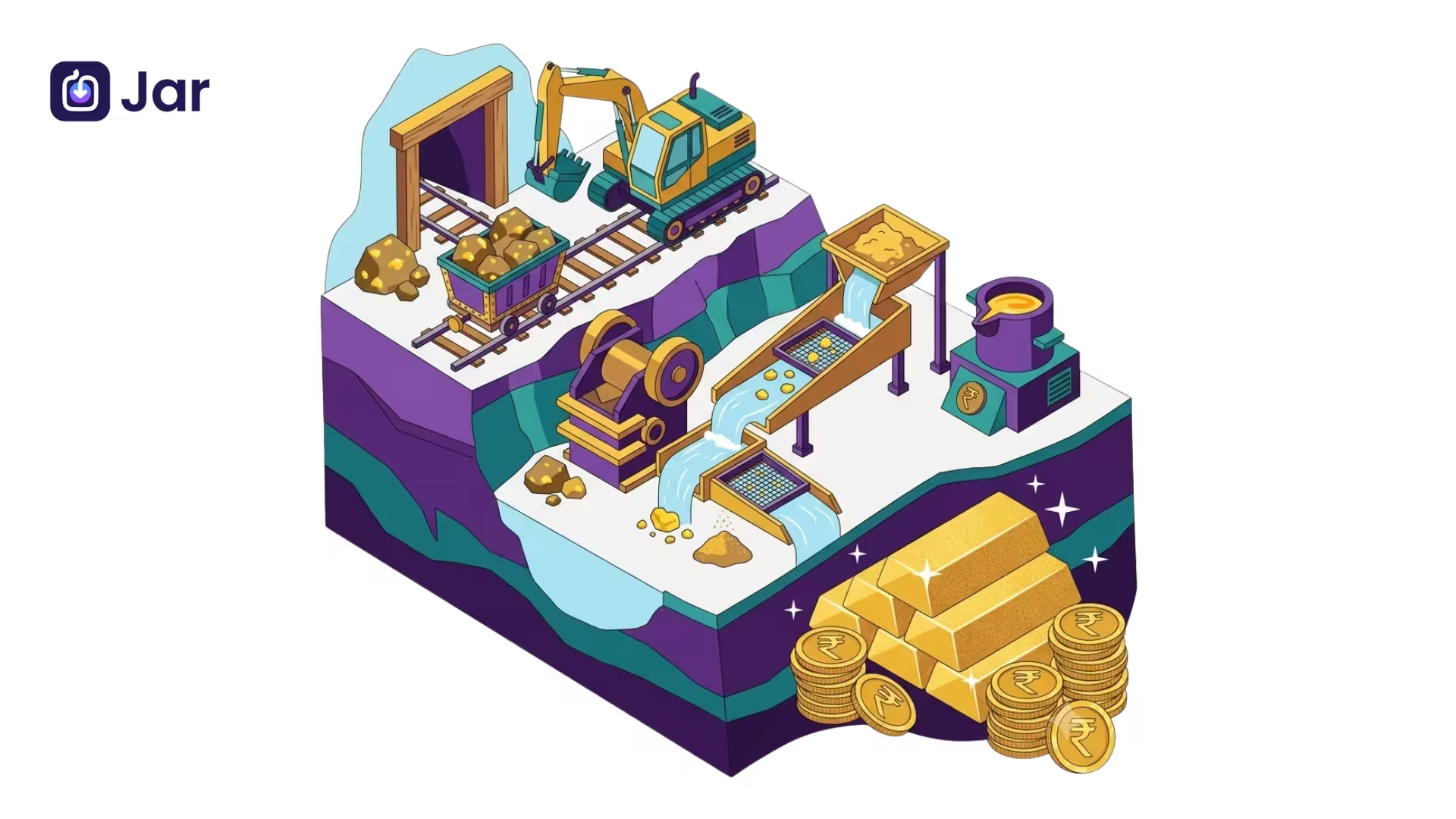
- Gold mining is a multi-decade lifecycle, not just digging.
- Exploration and development can take 10 to 20 years before production begins.
- Only a small fraction of explored sites ever become productive mines.
- Gold comes from two main types of deposits: placer (river) and hard rock (ore).
- Open-pit and underground mining are the two main ways to reach hard rock gold.
- Cyanide leaching is the most widely used chemical method for recovering gold from ore.
- Ore is first turned into doré, then refined into high-purity bullion.
- Land reclamation continues for years after a mine closes.
- Environmental and labour concerns are major issues, especially in artisanal mining.
- India has a long gold mining history, including the Kolar Gold Fields in Karnataka.
Gold has fascinated people for thousands of years, yet most of us only see it as a ring, a chain, or a shiny bar.
Ever wondered how gold is mined before it reaches a jeweller's shop or a bank vault?
The picture of workers in hard hats underground is only part of the story. Mining the ore is just one stage in a process that can take a decade or more, from the first survey to the first gold. Industry data suggest it can take 10 to 20 years after a deposit is discovered before a mine is ready to produce gold that can be refined into bullion.
In this guide, you will learn how gold is mined step by step, the main methods used around the world, how raw ore is processed, and how the metal is refined to high purity. We will also look at the environmental and social challenges involved.
Quick Snapshot on Gold Mining Stages
| Stage | What Happens | Typical Timeline |
| Exploration | Geologists find and test promising deposits | Several years, varies by site |
| Development | Permits, feasibility study, and construction | Several years |
| Mining operation | Ore is extracted and processed into doré | 10 to 30 years |
| Ore processing | Crushing, grinding, and chemical leaching | Ongoing during operation |
| Refining | Doré is purified into bullion-grade gold | After mining, at a refinery |
| Closure | Equipment is removed and the site is dismantled | 1 to 5 years |
| Reclamation | Land is restored and monitored | 5 to 10 years or more |
How Gold is Mined: Understanding the Gold Mining Lifecycle
Most people picture miners deep underground, but extraction is only one step. The gold mining process moves through stages that each take years. Think of it as a life cycle with a slow beginning, a productive middle, and a long ending.
Exploration: The Risky First Step
Exploration is the earliest and riskiest stage. Teams look for regions with the right geology, using aerial surveys, magnetic and gravity readings, and soil and stream sediment sampling. When a promising spot turns up, drilling brings out cylindrical core samples. These are tested to estimate the gold concentration (grade) and the total amount of rock (tonnage).
The odds are steep. Less than 0.1% of explored sites lead to a productive mine, and only about 10% of gold deposits contain enough gold to justify further development.
Development: Building the Mine
Once a deposit looks worth pursuing, the team builds a detailed model of costs, risks, and infrastructure needs. Mining companies must obtain permits and licences, which can take several years and vary widely by location. Construction follows. This includes processing plants, roads, power and water supply, worker housing, and safety systems.
Many companies also build facilities for nearby communities, such as clinics and schools. Over time, these investments often become a lasting source of support for the local economy. Development is expensive and can cost hundreds of millions of dollars.
Mining Operation: The Productive Years
The productive phase of a gold mine can last 10 to 30 years. During this time, ore is extracted and processed into a gold-rich alloy called doré. Mine plans are reviewed regularly as conditions change.
Gold prices play a big role here. When prices are high, lower-grade ore becomes worth digging, because the higher price covers the cost of moving more rock. When prices fall or costs rise, only richer ore may be profitable. New technology is also changing this stage. Electrification, digital monitoring, and automation are becoming more common in modern mines.
Closure and Reclamation: Life After Mining
When the ore runs out or becomes uneconomic to mine, the site is closed. Equipment is dismantled and the land is rehabilitated. This usually takes one to five years.
The work does not end there. Mining companies typically monitor the site for five to ten years or longer. The land is replanted, water quality is checked, and the aim is to bring the area back to long-term environmental stability.
Where Gold Is Found: Placer and Hard Rock Deposits
Geologists divide gold deposits into two main types, and the type decides how the gold is mined.
Placer Deposits: Gold from Rivers and Sediment
Over time, weather breaks down rocks and releases gold. Water carries these tiny grains downstream, and because gold is very dense, it settles in riverbeds, stream bends, and floodplains. These are called placer deposits.
Placer mining uses water and gravity to separate gold from sand, gravel, and sediment. Gold panning is the simplest form and is still practised by hobbyists and small communities. Sluice boxes with riffles, and dredges in larger operations, do the same job at a bigger scale.
In India, communities such as the Sonajhar community in Chhattisgarh have traditionally collected gold particles from river sediment. Placer mining is less common in large commercial operations today, but it still supports many small-scale miners.
Hard Rock (Lode) Deposits: Gold Locked in Rock
Most of the world's gold comes from hard rock deposits. Hot, mineral-rich fluids moved through cracks in the Earth's crust and left gold in quartz veins and surrounding rock.
The gold is locked inside solid rock, so it has to be broken down and chemically treated before it can be recovered. Hard rock deposits are reached through open-pit or underground mining.
By-Product Mining: Gold Found Alongside Other Metals
Sometimes gold is recovered while mining something else. Large copper mines often produce considerable gold along with copper. Sand and gravel operations can also recover small amounts. In these cases, gold is a by-product, not the main target.
Gold Mining Methods: Open-Pit, Underground, and Small-Scale
The method a company chooses depends on how deep the gold is, how it is spread, and the local geology.
Open-Pit Mining
Open-pit mining is used when gold lies near the surface over a wide area. Miners first remove the overburden, which is the soil and rock on top. They then cut step-like benches into the pit to reach ore at different depths. Explosives, loaders, and haul trucks do most of the work.
Open-pit mines can handle large volumes of ore efficiently. However, they create a lot of waste rock and cause significant changes to the landscape.
Underground Mining
When gold is deep below the surface, miners dig tunnels and shafts. There are several common techniques:
- Room and pillar: Miners dig out rooms and leave pillars of ore to hold up the roof.
- Cut and fill: Horizontal slices are excavated and backfilled with waste rock or cement as the work moves upward.
- Block caving: Large blocks of ore are allowed to collapse under gravity into collection tunnels.
Underground mining is costlier and riskier than open-pit mining. Still, for deep, high-grade deposits, it is often the only practical option. South Africa's deepest hard rock mines go several kilometres underground. The heat there is so intense that air conditioning is needed to keep workers safe.
Artisanal and Small-Scale Mining
Millions of people mine gold on a small scale. Estimates put the number at 10 to 15 million worldwide. Many of them work this way to escape poverty and unemployment, using basic tools and hard labour.
This work is often informal and poorly regulated. Miners face risks such as collapsing pits and exposure to mercury during processing. Concern also extends to children. An estimated 600,000 children work in illegal artisanal gold mines, often in dangerous conditions.
Gold Ore Processing: From Rock to Doré
Once ore leaves the ground, it goes through several steps to separate the gold from the rock.
Crushing and Grinding
The ore is taken to a processing plant and crushed into smaller pieces. It is then ground into a fine powder. This frees the tiny gold particles from the surrounding rock, which makes the next steps possible.
Cyanide Leaching
Most gold today is recovered using cyanidation, a method developed in the late 1800s. The finely ground ore is treated with a sodium cyanide solution. The cyanide dissolves the gold and turns it into a water-soluble complex.
There are two common approaches. Vat leaching suits higher-grade ore and happens in large tanks. Heap leaching suits lower-grade ore, which is stacked on lined pads and sprayed with the cyanide solution over weeks or months. The gold-rich solution is collected, the gold is absorbed onto activated carbon, and then it is stripped off and recovered.
Cyanide is highly toxic. Spills and leaks can harm rivers, aquatic life, and people living nearby, so strict management is essential.
Gravity Separation and Older Methods
Gravity-based equipment, such as shaking tables, spiral concentrators, and centrifugal bowls, can recover free gold. These machines use density differences to separate heavy gold particles from lighter material.
Mercury was once widely used. It formed a gold-mercury mixture called an amalgam, which was heated to drive off the mercury and leave the gold behind. Large-scale use of mercury stopped in the 1960s. Artisanal miners still use it in some regions, which is dangerous because mercury vapour is toxic.
Refining Gold to Bullion Purity
Doré is not pure gold. It still contains silver, copper, and other metals, so it has to be refined before it can be used for investment or coinage. Two processes are widely used.
The Miller process passes chlorine gas through molten gold to remove base metals. It is fast and efficient, and it yields gold of about 99.5% purity.
The Wohlwill process dissolves the gold in hydrochloric acid and then uses electrolysis to deposit it onto cathodes. It is slower and more expensive, but it reaches 99.99% purity. This grade is needed for investment bars and high-quality coins.
After refining, the gold is cast into bars or coins. It may then be stored in secure vaults or moved into the market.
A Brief History of Gold Mining
Gold has been mined for thousands of years. The exact start is unknown, but some of the oldest known gold objects come from the Varna Necropolis in Bulgaria. Those graves were built between about 4700 and 4200 BC.
Ancient Beginnings
In ancient Egypt and Nubia, miners panned riverbeds and dug tunnels to follow gold-bearing quartz veins. The Romans later used large-scale water-based methods to extract gold from loose sediment. Gold was central to the economy and to royal power in many early civilisations.
India's Kolar Gold Fields
India has its own long gold story. In the Kolar district of Karnataka, people were digging small pits for gold before the 2nd and 3rd centuries CE. Gold objects from the ancient cities of Harappa and Mohenjo-daro have been traced back to Kolar ore, using the distinct silver content of that ore as a clue.
Mining continued through the Gupta, Chola, and Vijayanagara periods, and later under Tipu Sultan and the British. The Kolar Gold Fields became one of the best-known gold mining areas in the country.
Gold Rushes That Shaped the World
Gold rushes brought large waves of people to new regions. The 1849 California Gold Rush drew migrants from around the world. Victoria in Australia saw a huge influx in the 1850s. The discovery of gold on the Witwatersrand in South Africa led to the growth of Johannesburg, which is still known as the city of gold. The Klondike Gold Rush in Canada began in 1896.
Environmental and Social Challenges
Gold mining has real costs, both for the environment and for people.
Gold mining produces an enormous amount of waste. One estimate puts it at roughly three million kilograms of waste rock for every kilogram of gold produced. Tailings, the leftover fine material from processing, can release heavy metals such as arsenic, mercury, and lead into the surrounding land and water. Cyanide and mercury can contaminate rivers, and the effects may last for decades.
Forests are also at risk. Gold mining has been linked to deforestation, especially in tropical regions, and recovery of cleared forest can be very slow. Air pollution from machinery and processing can affect nearby communities.
Social issues are equally important. Large projects sometimes require land acquisition, which can displace local families. Some regions have seen conflicts over land rights and labour exploitation. Certification schemes such as Fairmined aim to promote responsible practices, and campaigns such as No Dirty Gold push for better standards across the industry.
Why Gold Mining Is Getting Harder
Easy gold is largely gone. Many of the world's richest deposits have already been mined. Today, many large operations work with ore containing far less gold than in earlier times, so they must move and process much more rock to get the same output.
Exploration is also more difficult. Between 1985 and 2005, the number of global gold discoveries fell by more than 30%, according to one industry account. Deeper mines are costlier to run, because they need more ventilation, cooling, and hoisting. Remote or politically unstable regions often lack infrastructure, which adds further risk.
Even so, gold output has continued to grow in some places. Bigger installations, better technology, and improved extraction techniques have helped miners keep production going.
What Gold Mining Means for Buyers
Mining is only one source of gold. Recycled gold scrap and sales by central banks also add to supply, so new mining does not have to meet all demand. Mining costs and output still shape the wider market, though, because the cost of producing gold influences how much is available and at what price.
If you are buying gold for jewellery, bars, or coins, it helps to understand where the metal comes from and how it is refined. Ask for purity details and buy from sellers who clearly explain their products.
Conclusion: Gold's Long Journey from Ground to Jewellery Box
So, how is gold mined? It starts with patient exploration and a long development phase. It continues through years of careful extraction, processing, and refining, and it ends with land reclamation. Each stage requires expertise, money, and a clear view of the environmental and social impact.
When you next hold a gold piece, you are holding the result of a very long and complex process. Understanding that journey helps you appreciate the metal, and it also helps you make more informed choices as a buyer.
Frequently Asked Questions
How long does it take to open a gold mine?
Industry estimates suggest it can take 10 to 20 years from the discovery of a deposit to the point where the mine produces gold that can be refined into bullion. This includes exploration, permits, and construction.
Is cyanide used in all gold mining?
No. Gravity separation can recover free gold without chemicals. However, cyanide leaching is the most widely used chemical method for recovering gold from ore in industrial operations.
What is doré?
Doré is a gold-rich alloy produced at the mine after ore processing. It usually contains silver and other metals, and it must be refined further before it becomes pure gold.
Can gold really be found in rivers in India?
Yes. Some communities, such as the Sonajhar community in Chhattisgarh, have traditionally collected gold particles from river sediment. The amounts are small, which is why it is a manual, low-yield activity.
Why is gold mining considered dangerous?
Miners face risks such as collapsing tunnels, extreme underground heat, and exposure to toxic substances like cyanide and mercury. Artisanal mining carries especially high risks because of weaker safety rules.
What is the difference between placer and hard rock mining?
Placer mining recovers gold from sand, gravel, and sediment in rivers using water and gravity. Hard rock mining extracts gold locked inside solid rock, which must be crushed and chemically treated.