


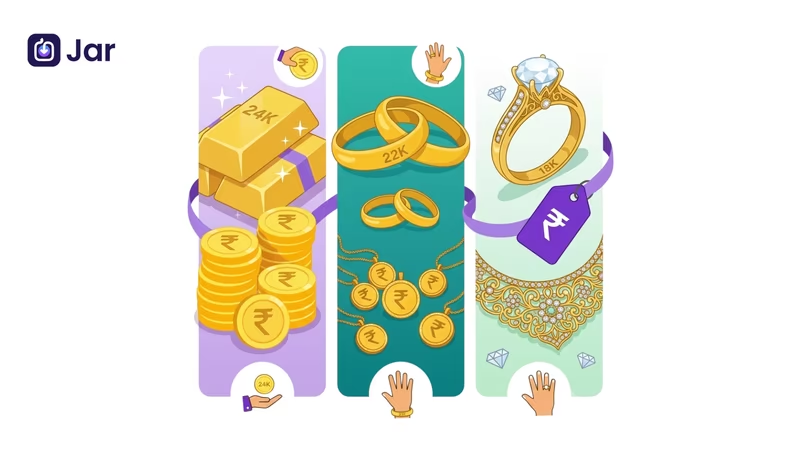


Walk into any jewellery store in India and you'll hear it almost immediately: "Sir, 22K chahiye ya 18K?" Most people just nod and pick whatever sounds familiar.
But here's the thing: the karat you choose actually matters quite a bit. It affects how much you pay, how long the piece lasts, and whether it holds its value when you sell.
By the end of this guide, you'll know exactly what each karat means and which one fits your purpose.
What Is a Karat in Gold?
Karat (abbreviated K or KT) measures the purity of , specifically how much actual gold is in a piece compared to the other metals mixed into it.
Pure gold is 24 karats, meaning all 24 parts are gold. But pure gold is incredibly soft. Left asis, it bends, scratches, and loses shape embarrassingly fast.
So goldsmiths mix it with harder metals like copper, silver, zinc, or nickel to make it usable. The karat number tells you the ratio of gold to those added metals.
A higher karat means more gold, a richer colour, a higher price and less durability. A lower karat means more alloy, greater hardness, lower cost, and better resistance to everyday wear.
This tradeoff between purity and practicality is exactly why different gold karats exist for different purposes.
Download the Jar app and start buying 24K digital gold for ₹10
Breaking Down Each Karat From Purest to Most Practical
24K Gold: Purest, But Not for Wearing
24K gold is 99.9% pure, with no alloys, and nothing added. It has the deepest, richest yellow you'll ever see, almost orange-warm in natural light. It's also the softest form of gold available.
That softness is the problem. A 24K ring would scratch within days of regular wear. Prongs on a 24K setting would bend, and any stones set into it would fall out quickly. It's simply not made for daily life.
Where 24K makes complete sense is investment gold bars, bullion coins, and government-minted coins are typically 24K. It's also the standard used in digital gold, where you buy fractional ownership of physical 24K gold stored in a secure vault.
You can start with as little as ₹10, with no storage headache and no theft risk.
Best for: Investment, gold bars, bullion coins, digital gold
22K Gold: The Indian Standard for Jewellery
22K gold contains 91.7% pure gold. The remaining 8.3% is usually copper and silver. That small addition of alloy gives it just enough hardness to hold its shape through daily wear while keeping a deeply rich colour that's nearly indistinguishable from pure gold.
In India, 22K is the gold of choice for traditional jewellery, the kind you wear at weddings, festivals, and family ceremonies. Artisans almost always craft heavy necklaces, bangles, temple jewellery, and gold chains in 22K. The intricate filigree work you see in South Indian jewellery exists because 22K is malleable enough for fine detailing yet hard enough to hold that shape over time.
22K jewellery is typically sold by weight at rates tied directly to the daily market price of gold, and it carries strong resale value in the Indian market.
Best for: Traditional wedding jewellery, bangles, plain gold chains, festival wear
18K Gold: The GoTo for Diamond Jewellery
18-karat gold is 75% gold mixed with 25% alloy. It is much harder to work with than 22K because of the higher alloy content, which is ideal when setting precious stones.
When a jeweller sets diamonds or gemstones, the tiny prongs that hold the stones in place need to grip tight and stay that way for years. This is not a good use for 22K gold, as it is softer. Hence, 18K has the structural strength to hold the stones firmly in place, which is why almost all diamond jewellery in India is made in 18K.
18K is also the base for white gold and rose gold; the former is made by alloying it with palladium or nickel, while a higher ratio of copper makes for that warm pink of rose gold. Pricewise 18K is less than 22K, as it has less gold and is more approachable for a premium look.
Best for: Diamond jewellery, engagement rings, white and rose gold pieces, everyday luxury wear
14K and Lower: Durable, Affordable, and Underrated
14K gold is 58.3% pure with 41.7% alloy, making it significantly harder than both 18K and 22K. It's hugely popular in Western markets and increasingly available in Indian stores. The colour is a warm, muted gold noticeably less intense than higher karats, which many buyers actually prefer for a contemporary, understated look.
10K gold drops to 41.7% pure gold. It's the most durable alloy in common use, highly resistant to everyday scratches and dents. It's widely sold in the US and UK and growing in availability in India.
9K gold contains only 37.5% gold. It's very cheap and durable and popular in UK and Australian markets. If you’re buying 9K gold in India, it’s worth knowing that its hallmarking status is still evolving – as of early 2026, it remains a voluntary grade, rather than a mandatory hallmarked category, which can make resale trickier.
Best for: everyday rings & bracelets (14K/18K), children’s jewellery & budget pieces (9K/10K)
Karat Purity at a Glance
Here's a quick reference for what each karat stamp actually means:
| Karat | Gold Purity | Alloy Content | Fineness Stamp |
| 24K | 99.90% | 0.10% | 999 |
| 22K | 91.70% | 8.30% | 916 |
| 20K | 83.30% | 16.70% | 833 |
| 18K | 75.00% | 25.00% | 750 |
| 14K | 58.30% | 41.70% | 585 |
| 10K | 41.70% | 58.30% | 417 |
| 9K | 37.50% | 62.50% | 375 |
The fineness stamp, like 916 or 750, is an alternative marking system you'll often see on hallmarked jewellery. It's simply the gold purity expressed as parts per thousand rather than parts per 24. So 916 means 916 parts out of 1,000 are pure gold, which is 22K.
Which Karat Should You Actually Choose?
The honest answer: it depends entirely on what you're buying gold for. Here's a clean breakdown to cut through the decision fatigue:
| Purpose | Recommended Karat | Why |
| Investment / Savings | 24K | Maximum purity = maximum value retention |
| Traditional wedding jewellery | 22K | Rich colour, detailed craftsmanship, high resale value |
| Diamond / gemstone jewellery | 18K | Hard enough to hold prong settings securely |
| Everyday rings and bracelets | 14K or 18K | Durable enough for daily use |
| Children's jewellery | 9K or 10K | Affordable, highly scratch-resistant |
| Digital gold / bullion | 24K | Pure investment grade, no making charges |
See our guide on how to buy digital gold in India
How to Read Gold Hallmarks and Spot Fakes
Every genuine piece of gold jewellery carries identifying stamps. You just need to know where to look.
The BIS Hallmark System
The Bureau of Indian Standards (BIS) hallmarking system is mandatory for gold jewellery sold in India. A BIS hallmarked piece carries three things: the BIS logo (a triangle symbol), the purity grade (such as 916 for 22K or 750 for 18K), and a unique six-digit alphanumeric HUID code specific to that piece.
Always buy hallmarked gold. It's the only reliable way to confirm you're getting what you're paying for.
Where to Find the Stamp
On rings, check the inner band. On necklaces and chains, look near the clasp. On bangles, check the inner surface. The engraving is tiny; a strong magnifying glass or jeweller's loupe helps.
Verifying a HUID Code
The free BIS Care App (available on Android and iOS) lets you enter a sixdigit HUID and instantly confirm the piece's purity, the registered jeweller, and when it was hallmarked in under 30 seconds. For anyone buying jewellery without a trusted jeweller present, this is the simplest on-the-spot check available.
If a piece has no stamp at all, that's a serious warning sign. It's not necessarily fake, but get it professionally tested before paying a premium.
A Quick Note on Resale Value
Higher karat gold karats generally commands better resale value, but the actual amount you recover also depends on the jeweller's buyback policy and whether the piece is BIS hallmarked. Hallmarked 22K and 18K jewellery stamped 916 or 750 is significantly easier to resell at fair market rates than unmarked pieces. If resale matters to you, the hallmark isn't optional.
FAQs About Gold Karats
What does 916 mean on gold jewellery?
916 is the fineness stamp for 22K gold, indicating that 91.6% of the piece is pure gold. It's the most common purity used in Indian jewellery and part of the BIS hallmarking system.
Which karat of gold is best for daily wear?
18K or 14K gold is the most practical for daily wear. Both are hard enough to resist everyday scratches and dents while still looking rich and retaining reasonable resale value. 22K is beautiful but too soft for pieces you'll wear constantly.
Is 24K gold jewellery available in India?
It's extremely rare and impractical as wearable jewellery. What you'll find in the 24K category are gold coins, bars, and digital gold not rings or necklaces. A few stores sell 24K coins for gifting or investment purposes.
How do I check if my gold is real at home?
The most reliable home methods are the magnet test (real gold is nonmagnetic) and checking for a hallmark stamp with a magnifying glass. You can also use the free BIS Care app to verify the HUID number instantly. For complete certainty, a BIS hallmarking centre can do a professional assay.
Which gold karat has the best resale value in India?
22K hallmarked gold (916) generally has the best resale liquidity because it's the most widely traded purity in the domestic market. 24K in coin or bar form also commands excellent rates. The key factor is always a valid BIS hallmark without it, resale becomes difficult regardless of karat.
Can I mix karats in a jewellery set?
Technically yes, but it's not advisable if resale value matters. Mixing 22K and 18K pieces in a bridal set, for example, means they'll be valued and sold differently. If you're building a set meant to be sold together, stick to one karat throughout.
Which is better for an engagement ring? 18K or 22K?
18k is a better choice for engagement rings, particularly with diamonds or gemstones. The higher alloy content makes it harder, able to hold stone settings securely for years of daily wear. 22K looks beautiful but is more susceptible to scratches and bending with everyday use.