



Most articles on gold say the same thing: put 5 to 10% of your money in gold. That's a fine starting point, but it doesn't tell you much. Your age, your goals, and what you already own all change the answer.
This guide explains where the 5–10% rule works, where it breaks down, and how to find the right number for you. You'll also see how to build and rebalance your gold holdings without trying to guess the market.
Key Highlights
- For most investors, a gold allocation of around 5% to 10% of their investment portfolio is a common starting point.
- Gold often moves differently from shares, which can help steady a portfolio during market drops.
- Gold doesn't pay interest or dividends, so a very large allocation can slow long-term growth.
- Taxes, GST, and making charges can change how much you actually keep.
- Rebalancing once a year, or when your gold share drifts far from your target, keeps your plan on track.
What Role Does Gold Actually Play in a Modern Investment Portfolio?
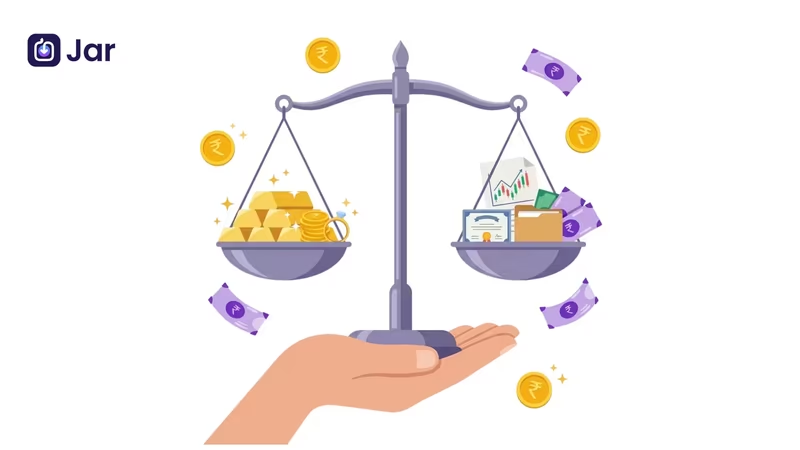
Gold's main job in a portfolio is to help balance out your other investments. It doesn't need to be your best performer to be useful.
The Portfolio Stabilizer
Gold often moves differently from shares. When stock markets fall sharply, gold sometimes holds steady or rises, though that's not guaranteed. You can see how gold and equities have compared over time in our gold versus equity returns comparison.
Purchasing Power Protection
Inflation slowly reduces what your money can buy. Over long periods, gold has often kept pace with rising prices, which is one reason people hold it. Over short periods, though, gold can fall a lot, so it isn't a guaranteed shield against inflation.
Gold Is a Hedge, Not a Growth Engine
Shares and bonds can grow your money through profits and interest. Gold grows only if its price goes up. That's why most people use gold to protect their portfolio rather than to build wealth quickly.
Is the 5–10% Gold Rule Right for You?
The 5–10% rule is a common rule of thumb, not a law. It's useful because it keeps gold from dominating your portfolio. But it ignores your personal situation.
Why 5–10% Is the Usual Starting Point
Many financial planners use this range because it's large enough to matter during a crisis and small enough that it won't hold back growth. Think of it as a sensible default you can adjust.
What Happens If You Hold Less Than 5%?
At very low levels, gold has little effect on your portfolio. If stocks fall 20%, a 2% gold holding won't do much to cushion the drop. It's not wrong to hold less, but you shouldn't expect much protection from it.
When 15–20% Starts to Cost You
Gold can be a good hedge, but a large allocation means less money in assets that can grow faster over time. If gold makes up 20% of your portfolio, you may be giving up long-term growth you'll later wish you had.
Does Jewellery Count?
Usually, no. Jewellery is mostly for wearing and gifting. Making charges and GST mean you'll often get back less than you paid when you sell. Many investors track jewellery separately and count only coins, bars, digital gold, and ETFs toward their investment allocation.
The 3-Tier Model: How Much Gold Fits Your Life Stage
This simple framework helps you find a starting range. It's a guide for thinking, not personal financial advice.
Tier 1: The Growth-Focused Investor (5–7%)
If you have a long time horizon of 10 years or more and you're comfortable with stock market swings, a smaller gold share usually makes sense. Your equity investments do most of the heavy lifting.
Tier 2: The Balanced Planner (8–12%)
If you're mid-career, have goals coming up within five to ten years, or want more stability, this range often fits. Gold helps cushion your portfolio when markets get rocky.
Tier 3: The Capital Preserver (12–15%)
If you're close to retirement, rely on your savings for income, or feel very uneasy about market uncertainty, a higher gold share may suit you. Even here, avoid going much higher without a clear reason.
How Should You Split Your Gold Across Instruments?
Once you know your target, you still need to decide how to hold it. Each option has different costs and trade-offs.
| Option | Good For | Main Costs | Storage | Liquidity |
| Digital gold | Small, regular buying | Buy-sell spreads, GST | Stored by the provider | Sell in the app |
| Gold ETFs | Investors with a demat account | Brokerage, expense ratio | Held electronically | Sell on the exchange during market hours |
| Physical gold | Coins and bars for long-term holding | Making charges, GST, resale discounts | Locker or home (insurance needed) | Sell to a jeweller or dealer |
Digital Gold and Micro-Investing
Digital gold lets you buy small amounts of gold online, often starting with very little money. It suits people who want to build a habit. You can also set up round-ups and daily gold savings to add gold without thinking about it.
Gold ETFs and Gold Mutual Funds
Gold ETFs track the price of gold and trade on stock exchanges. They're convenient for investors who already use a demat account. Costs vary between funds, so compare expense ratios before you choose. If you're weighing options, our guide to choosing the right gold ETF explains the differences.
Physical Gold
Physical gold works well for long-term holding and wedding or family needs. But making charges, GST, and storage costs add up. You'll usually get back less than you paid when you sell.
What Are the Hidden Mistakes That Eat Into Gold Returns?
Most gold losses don't come from price swings alone. Small costs and poor timing can quietly reduce your returns.
Mistake 1: Buying Everything at Once at a High Price
Putting a large sum into gold after prices have already jumped can lead to disappointing results. Spreading purchases over time, through a monthly gold SIP, reduces that risk.
Mistake 2: Ignoring Costs
GST on gold purchases is currently 3%. Digital platforms also charge buy-sell spreads, and ETFs charge expense ratios. Check all costs before you invest, because they reduce your net returns.
Mistake 3: Overlooking Taxes
Gold taxes depend on the type of gold you hold and how long you hold it. Under the rules as we understand them, gains on physical gold, digital gold, and gold ETFs are taxed differently depending on holding period.
Read our detailed guide on how gold gains are taxed before you sell, and check the latest rules on the Income Tax Department website, since tax rules can change.
Mistake 4: Mixing Emergency Money With Long-Term Gold
Gold you might need in a month shouldn't be in the same bucket as gold you're holding for ten years. Keep emergency savings in an easy-to-access account, and treat gold as a long-term hedge. We also have a guide to help you decide if digital gold is suitable for emergency savings or not.
How Do You Build and Rebalance Your Gold Allocation?
Follow these steps to reach your target without trying to time the market.
- Add up your investments. Include shares, mutual funds, fixed deposits, and any gold you hold for investment. Leave out jewellery you wear.
- Find your gold gap. Multiply your total by your target percentage, then subtract the gold you already own.
- Pick your instruments. Choose a mix that fits your budget, comfort with paperwork, and how quickly you may need the money.
- Build slowly. A monthly or daily gold SIP lets you reach your target over time instead of all at once.
- Rebalance once a year. Check your gold share and adjust if it has drifted far from your target.
The 20% Drift Rule
A simple rule: rebalance when your gold share moves more than 20% away from your target. For example, a 10% target would prompt action if it reached 12% or dropped to 8%.
Example: Let's take a fictional example. Priya has ₹10 lakh invested, with ₹1 lakh (10%) in gold. Suppose gold rises 40% and her other investments stay flat. Her gold is now worth ₹1.4 lakh, out of a total of ₹11.4 lakh, which is about 12.3%. That's still within the drift band, so she doesn't need to sell. If gold rose 60%, her share would reach about 14%, and she might trim back toward 10%.
Frequently Asked Questions
Is 20% too much gold to hold in an investment portfolio?
For most investors, yes. Gold doesn't pay interest or dividends, so a large share can slow long-term growth. It can make sense for someone who is very worried about inflation or market crashes, but review it against your goals and timeline.
Should I include my gold jewellery when calculating my portfolio's gold percentage?
Usually not. Jewellery is mostly for wearing and gifting, and making charges and GST mean you may get back less than you paid. Many investors count only coins, bars, digital gold, and ETFs toward their investment allocation.
How does gold allocation change as you get closer to retirement?
Many people hold a little more stability as retirement nears, but the right number depends on your income needs, other savings, and comfort with price swings. A qualified financial adviser can help you decide.
Is it better to invest a lump sum in gold or build my allocation through a monthly SIP?
Neither is always better. A monthly gold SIP spreads your purchases over time, which can reduce the risk of buying everything at a high price. A lump sum can work well if prices are favourable, but nobody can predict that reliably. Choose the method you can stick with.
Does holding both gold and silver count toward the same precious metals allocation?
It can, if you treat them as one bucket. Silver often moves differently from gold and tends to be more volatile, so many investors track the two separately and set a limit for each.
Key Takeaways
- The 5–10% rule is a sensible starting point, not a fixed answer.
- Your life stage, time horizon, and comfort with risk should guide your target.
- Costs, GST, making charges, and taxes all reduce what you keep.
- A gold SIP and a yearly check-in are simpler than trying to time the market.
Start Small and Stay Consistent
If you're interested in building gold savings gradually, digital gold is one option to explore. Ready to invest in Gold? Jar offers investment in digital gold, which you can start anytime, and invest in gold starting from ₹10. Do read up on the costs, tax rules, and risks before you decide. Prices can rise or fall, and returns aren't guaranteed.