




| TL;DR Top practical money-saving tips for travelling abroad: - Plan trips early - Travel off-season - Use public transport - Avoid DCC abroad - Eat like a local Small habits drive real money saving. Jar App is the best investment app that helps you save in digital gold, so today’s savings can fund your next trip. |
As a young adult or even a new traveller going abroad, it’s natural to be wary of spending money.
You’d ask yourself, “What’s the most efficient way I can make this trip?” That’s why good money-saving tips for travel start way before you pack your bags.
This guide is for people who want to travel more without compromising the experience. Instead of extreme budgeting, we will focus on practical money management tips, realistic planning, and simple travel habits.
It’s all about smarter choices, not sacrifice.
Tip 1: Plan smart before you book anything
The most effective money-saving tips happen before you make a booking.
- Start with timing. Off-season travel and flexible dates lower flight and stay costs, making them some of the easiest money-saving ideas without sacrificing comfort.
- Next, set a simple travel budget—transport, stay, food, and a buffer. These financial tips help keep spending predictable and reduce stress.
- Lastly, save in advance instead of scrambling later. Small, consistent savings before a trip are practical money-saving advice that gives you more freedom while travelling.
With Jar, even spare daily change invested in digital gold can become travel-ready money.
Tip 2: Cut costs on flights, stays, and food while travelling abroad.
Flights, accommodation, and meals account for most travel spending. Managing these well is one of the simplest money-saving tips.
- Flights & transport: Budget airlines and public transport cost far less than last-minute flights or cabs.
- Stays: Hostels, guesthouses, homestays, and bundled bookings offer safe, well-located stays for less, especially outside tourist hubs.
- Food: Local eateries, free breakfasts, and one planned splurge meal a day help control daily costs.
How costs actually compare
| Decision | Costlier option | Smarter option | What you save |
| Travel timing | Peak season flights: ₹25,000-₹35,000 (international short-haul) | Off-season flights: ₹18,000-₹22,000 | ₹7,000-₹15,000 on flights alone |
| Stay (per night) | Hotel: ₹8,000-₹15,000 | Hostel/guesthouse: ₹4,000-₹6,000 | ₹4,000-₹9,000 per night |
| Transport (per day) | Cabs: ₹2,000-₹3,500 | Public transport: ₹200-₹500 | ₹1,500-₹3,000 per day |
*Note: The prices can vary based on location. These budgets are for nearby destinations within Asia.
Save those ₹15,000–₹30,000, invest them in digital gold, and fund your next trip before you even start planning it.
Tip 3: Build money-smart habits while you’re travelling
Overspending usually comes from small spends, not big splurges. Fix those habits, and minimise your travel budget for longer without effort. Here are some tips to cut down spending:
1. Everyday habits while travelling
| Situation | What most travellers do | Smarter alternative |
| Sightseeing | Book the first thing they see | Walk a block, compare locally |
| Getting around | Use cabs everywhere | Use metros, buses, and shared rides |
| Food breaks | Eat near attractions | Eat where locals eat |
| Experiences | Pay full price | Ask for student, group, or off-peak rates |
| Did you know? Most countries charge tourists more for attractions, transportation, food, and accommodations in locations with high tourist activity. These are known as “tourist traps.” Simply changing where you stop can be effective without changing what you do. |
2. Pay and withdraw money wisely
- Withdraw less, plan more: Fewer ATM withdrawals reduce fees and are one of the easiest money-saving tips while travelling.
- Always have a backup: A second card and some cash prevent costly last-minute fixes if one card fails.
- Track daily spend: You can get money-saving apps, or you can calculate your rough daily spending, which is a solid money management tip that keeps budgets intact.
Tip 4: Manage your cards and cash smartly when travelling abroad.
When travelling internationally, payment choices matter.
Check out some of the world’s most expensive currencies to plan your trips better
1. Use forex and travel cards correctly
Forex cards lock in foreign currency rates and help control spending.
Apply for credit cards that offer better exchange rates and fraud protection, and keep your own cash free if something goes wrong.
2. Avoid Dynamic Currency Conversion (DCC)
If a card machine abroad offers to charge you in INR, always decline and pay in the local currency. INR triggers Dynamic Currency Conversion (DCC), which uses poor exchange rates and hidden fees.
3. Be intentional with card vs. cash usage
Cards are safer and easier for most expenses, but most small vendors may accept only cash. Try to withdraw cash as little as possible and plan properly.
Cash limits to know before you travel:
- European Union: under €10,000
- United States: up to $3,000 for Indian travellers
- Canada & United Kingdom: under CA$/£10,000
- Australia: under AU$10,000
- Singapore: up to SG$20,000
4. Choose travel-friendly cards and banks
Watch out for high foreign currency conversion fees, international transaction and ATM charges, and fraud risks. Ensure international usage is enabled before you travel, understand your bank’s fee structure, and check if forex rate lock-in is available.
Banks with relatively travel-friendly card options (India):
- HDFC Bank: wide forex card options, good global acceptance
- ICICI Bank: competitive forex cards and travel credit cards
- Axis Bank: popular for international travel cards and rewards
- State Bank of India: broad acceptance, reliable forex cards
- IDFC First Bank: lower forex markups on select credit cards
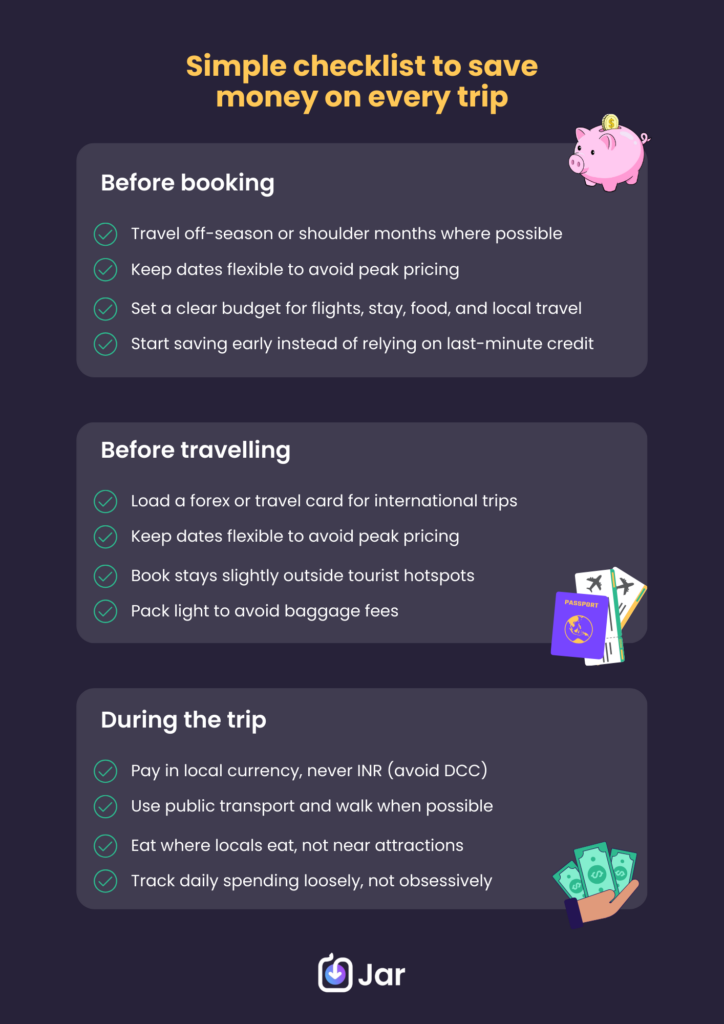
Simple checklist to save money on every trip
Use this quick checklist to apply the most effective money-saving tips without overthinking your plans.
The bottom line on saving money while travelling
Saving money while travelling doesn’t always mean you have to compromise on experiences. Instead, avoid unnecessary losses: plan ahead, make informed payment choices, and build a few smart habits, and your budget will naturally last longer.
That’s real money saving, without feeling restricted.
If travel is a regular goal, investing small amounts in digital gold through the Jar App helps your money grow instead of sitting idle, so you’re never starting from zero.
FAQs about money-saving tips
1. How to carry cash while travelling?
Carry small amounts in multiple places instead of a single wallet, and use cards for larger expenses. Withdraw cash in fewer and planned transactions to avoid repeated fees.
2. What is the best way to save money while travelling?
Plan early, travel off-season where possible, and avoid peak pricing and hidden fees. Most real savings come from smarter defaults, not cutting experiences.
3. How to save money on food while travelling?
Eat where locals eat, not near attractions, and limit restaurant meals to one splurge a day. Use free breakfasts, street food, or simple self-cooked meals to control daily costs.