


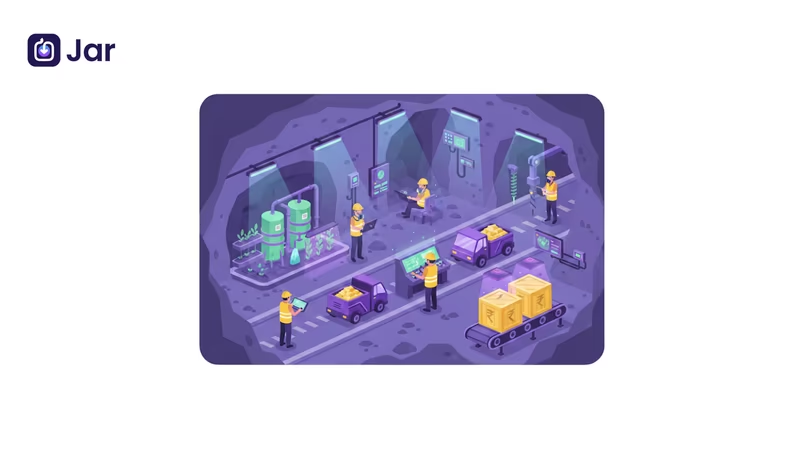


| TL;DR: A modern gold mine is no longer just about digging deep. Today’s mines rely on smart technology, automated equipment, strict safety systems, and sustainability-first practices. They now include: -Automated and remotely operated equipment -Real-time data and monitoring systems -Safer, low-impact extraction methods -Zero-discharge water management -Progressive land rehabilitation practices |
When people think of gold mining, the image that often comes to mind is dusty tunnels, manual labour, and constant danger. That picture belongs to another era.
A modern gold mine is more like an industrial complex that runs on data. Technology, safety laws, and steps to protect the environment dictate every decision, from where to drill to how to use water again.
Let’s figure out how the modern gold mining equipment has changed and the safety practices that current techniques follow.
Evolution from traditional mines to smart mining
More and more modern mines are being developed as smart mining systems, where machines, sensors, and software all work together in real time. Operators don't wait for problems to happen; they forecast and stop them.
Key changes that define smart mining include:
- Autonomous haulage systems: Driverless trucks move ore across large sites with consistent speed and precision, reducing accident risk and human fatigue.
- Drone-based surveying: Drones map terrain, inspect pit walls, and measure stockpiles faster and more safely than manual surveys.
- IoT-enabled monitoring: Machine sensors monitor performance, vibration, and heat, allowing repair teams to address issues before they become a major problem.
Modern gold mining equipment and extraction methods
Today's gold mine equipment is built around accuracy, control, and automation, not just hard work.
Modern gold mining equipment includes automated drills, remote-controlled loaders, and conveyor systems that are integrated with real-time data dashboards.
These gold mining tools allow operators to extract ore efficiently while maintaining tight safety oversight.
Check out the largest gold mines in the world.
Common gold extraction methods
Traditional techniques relied on aggressive chemical processes. Modern mines are shifting towards safer and less invasive extraction approaches that balance efficiency with environmental responsibility.
Two important developments are:
- Bio-oxidation: Naturally occurring bacteria are used to break down sulfide ores, reducing the need for harsh chemical treatment.
- Non-cyanide leaching: Where feasible, alternative compounds are used to lower toxicity risks associated with conventional cyanide-based processes.
These methods reflect a broader industry move toward controlled chemistry and stricter compliance standards.
Reducing human risk in modern gold mining
One principle defines safety in a modern gold mine: If humans do not need to be in danger, they shouldn’t be.
Mining companies now focus on “removing humans from the hazard” by shifting operations to remote and automated systems.
This approach has changed how mines operate:
- Underground machinery is controlled from secure surface-level control rooms
- Real-time alerts detect gas leaks, temperature spikes, or structural instability
- Fewer workers are required in confined or high-pressure environments
Because of this, the number of accidents in modern gold mines has gone down a lot compared to older ones, especially in places that are deep underground.
Sustainability in focus: Water, land, and ESG standards
Sustainability is no longer an optional add-on in mining. It is built into mine design from the start.
Efficient mining and lower operating costs affect gold prices worldwide. This makes the top countries with the cheapest gold price worth analysing.
Water management and zero discharge
Gold mining uses large volumes of water, making responsible management essential. Modern mines follow zero-discharge water policies, which means that any water used on-site is cleaned, returned, and used again instead of being dumped into nearby ecosystems.
This involves:
- Closed-loop recycling systems
- On-site treatment plants
- Continuous water quality monitoring
In many regions, meeting these standards is mandatory for operating licenses.
Progressive land rehabilitation
Modern mines no longer wait until extraction ends to restore land.
Progressive restoration means that mined areas are returned to nature while work is still being done in other places. During the whole mining process, the soil is fixed, native plants are grown again, and biodiversity is monitored.
ESG standards and the green premium
Environmental, Social, and Governance (ESG) metrics now play a direct role in how gold is valued. Mines that meet higher ESG benchmarks often command a green premium, reflecting responsible sourcing and long-term risk management.
This explains why gold of the same purity may carry different values depending on how it was mined.
What most gold buyers never see
Behind every gram of gold lies a complex system most buyers never witness.
What remains invisible includes:
- Control rooms monitor operations around the clock
- Environmental audits running parallel to production
- Predictive models forecasting equipment issues weeks in advance
Modern gold mining focuses more on continuous oversight and accountability.
Why modern mining matters for today’s gold buyers
Modern mining explains two important realities about how gold is produced and priced.
First, why the gold supply remains resilient even during economic pressure.
Second, why responsibly sourced gold holds long-term relevance beyond price fluctuations. Understanding where gold comes from builds confidence in it as a store of value.
If you want to explore how mining connects to regional supply, check out Gold Mines in India: The Untold Story.
Final thoughts: Gold mining has quietly changed
Gold mining today is defined by intelligence, not intensity.
Technology has reduced risk. Safety systems protect workers. Sustainability frameworks safeguard land and water.
The modern gold mine is a carefully controlled ecosystem: one that reflects how seriously the world now treats the metal it continues to trust.
The question is, if gold mining has evolved with technology and safeguards, shouldn’t gold saving evolve too?
The Jar app lets you start with as little as you want and build 24K gold savings at your own pace.
FAQs on modern gold mine
1. Does sustainable gold mining affect the price of gold?
Sustainably mined gold can carry a “green premium” of 2-5%, depending on sourcing standards and ESG compliance.
2. How much safer are modern gold mines compared to older ones?
Industry safety studies have found that mines using remote-controlled and automatic systems have 30–60% lower accident rates than normal mines, especially in places that are deep underground.
3. What percentage of gold mining operations use automation today?
About 40 to 60 per cent of big gold mines across the world use some kind of automation, such as self-driving trucks, remote drilling, or AI-powered monitoring systems.