


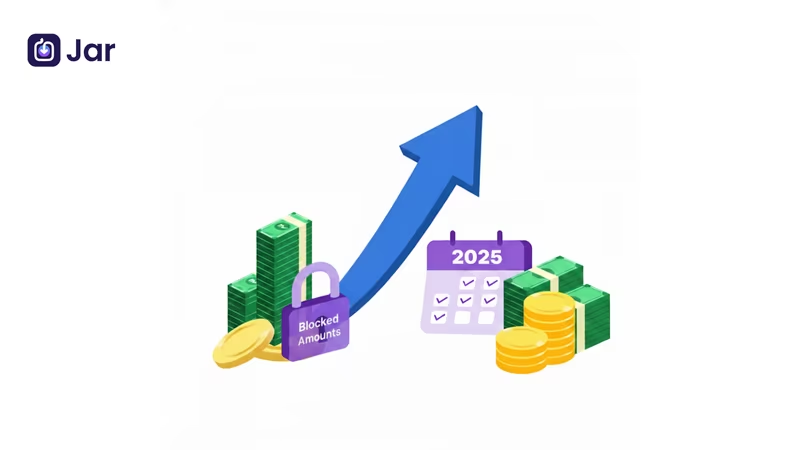


The ASBA full form is Applications Supported by Blocked Amounts. It is a system introduced by the Securities and Exchange Board of India (SEBI) to make the process of applying for public issues like IPOs (Initial Public Offerings) and FPOs (Follow-on Public Offerings) more efficient and secure.
This mechanism ensures that an investor’s money remains in their bank account until the shares are allotted.
In simple words, when you apply for shares through ASBA, your application amount is not immediately debited.
Instead, it stays blocked in your account and is released or debited only after the allotment is confirmed. This gives investors control over their funds while maintaining transparency.
How Does ASBA in Banking Work?
The concept of ASBA in banking is quite straightforward. When investors submit an application through their bank for an IPO or FPO, the required amount is blocked by the bank.
The blocked amount cannot be used for other transactions, but it continues to earn interest. Once the allotment is made, the bank transfers the funds for the allotted shares and releases the remaining amount automatically.
Steps for an ASBA application:
- Log in to your net banking account through ASBA login credentials.
- Select the IPO or FPO you wish to invest in.
- Enter your bid details, quantity, and price.
- Review and submit the ASBA application.
- The corresponding amount will be blocked in your account.
Timing and Example
The ASBA closing time usually aligns with the IPO bidding window, which is typically from 10:00 a.m. to 5:00 p.m. on working days.
For example, if you apply for a company’s IPO worth ₹15,000, this amount remains blocked in your bank account.
If you receive the allotment, the amount is debited; if not, the block is lifted without any refund process.
So, ASBA’s full form represents a secure and efficient way to invest in public issues while keeping your funds under your control.