


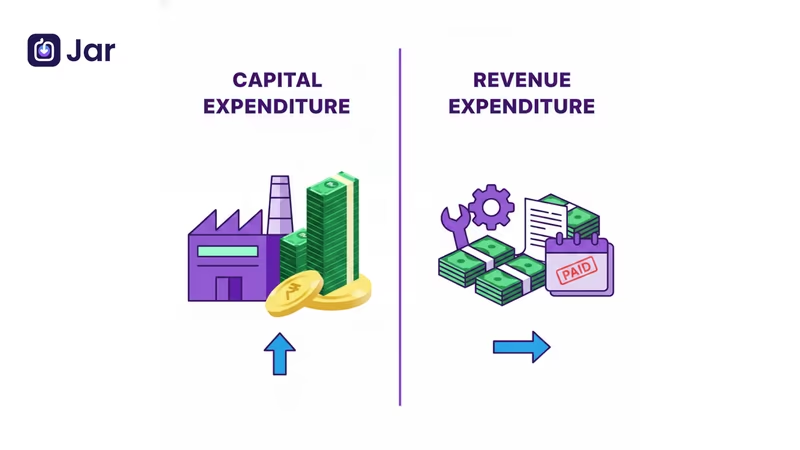


Capital and revenue expenditures refer to two different types of expenses in finance. Capital expenditure, or CapEx, is the expense that a business or organisation spends to acquire, maintain, or upgrade fixed assets.
They may include land, buildings, and equipment. Whereas revenue expenditure, or OpEx, is the expense that a business or organisation spends to run its routine operations.
Key Differences Between Capital Expenditure and Revenue Expenditure
| Particulars | Capital Expenditure | Revenue Expenditure |
| Purpose | To boost revenue and earning capability | To carry out the business’s everyday tasks |
| Time Horizon | Long-term | Short-term, typically limited to a fiscal year |
| Treatment in Accounts | Considered as ‘assets’ | Considered as ‘expenses’ |
| Frequency | Not generated regularly | Generated frequently across the financial year |
| Capitalisation | Capitalised | Not always capitalised |
Examples of Capital and Revenue Expenditure
Learn the difference between capital expenditure and revenue expenditure with examples to see how each affects a business’s finances.
Capital Expenditure Examples:
- Buying new equipment
- Acquiring land for further expansion
- Constructing warehouses or a new office area
- Upgrading existing machinery
- Buying vehicles for seamless and quick delivery
- Paying money to renew copyrights
Revenue Expenditure Examples:
- Paying warehouse or office rent
- Covering utility bills, such as internet, electricity, water, etc.
- Paying employee salaries
- Providing freight charges
- Bearing inventory running costs
- Incurring expenses for promotional purposes, such as marketing campaigns
Having a balance between two expenses is necessary. Otherwise, it can lead to financial strain for the companies, forcing them to apply for loans to manage these expenses, which is not recommended.