


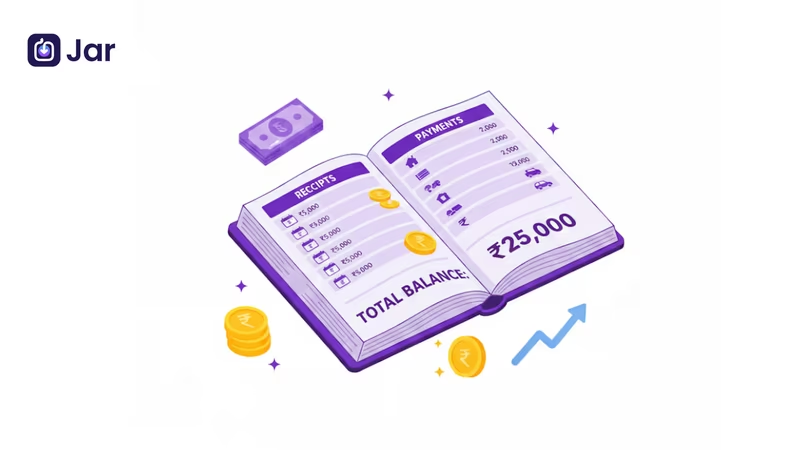


A cash book refers to a financial record that chronologically lists all cash transactions. They include cash receipts and payments. This accounting tool offers businesses real-time insights into their cash transactions.
If considering the cash book format, you can see a systematic format to make recording and referencing of cash transactions easier.
Cash Book Format in Accounting
There are several formats in such books. Some may create different columns for credits vs. debits. Others can use parentheses "( )" or the "-" sign to indicate the debit section.
However, each cash book format in India includes essential details. They are:
- The date of the cash transaction (in chronological order)
- Name of the particulars
- Reference or folio number
- Amount
- Discounts (if any)
- Current balance
This cash book format enables the calculation of cash balances immediately and simplifies the process of bank reconciliation.
Different Types of Cash Books
Typically, there are three primary variants of such books. Each is designed to meet specific accounting needs and address varied levels of complexity.
Single Column
It is the simplest form, suitable for small business owners and sole proprietors.
Double Column
It is considered a more sophisticated version, which has separate cash and bank columns.
Triple Column
It comes with an extra column for recording discounts on transactions, mostly used by large businesses or popular brands.
Advantages of Keeping a Cash Book
Beyond providing real-time data on the cash movement of your business, you can:
- Ensure accuracy and minimise errors to a large extent, which is helpful for the auditing process
- Saves your valuable time by eliminating the dependencies in independent journal and ledger entries
While many owners continue with traditional paper-based books of account, you can consider using a cash book format in Excel or Google Spreadsheet.