




Indians use gold abundantly — from weddings to festivals, this shiny yellow metal always makes its presence felt. Wearing gold jewellery and gifting gold is considered to be auspicious.
Hence when it comes to buying gold, purity is a big criteria. There are many options to choose from, including Hallmark gold , KDM gold, and 916 varieties. We often hear suggestions to buy hallmark gold, or to check the gold’s purity through government details.
What does one need to do when they want to buy gold? What's the difference between Hallmark and KDM gold? What's the difference between KDM and 916 gold.
In this blog post, we will discuss the differences between these types of gold and help you determine which one is the best for you.
What is Hallmark Gold?
What is Hallmark Gold?
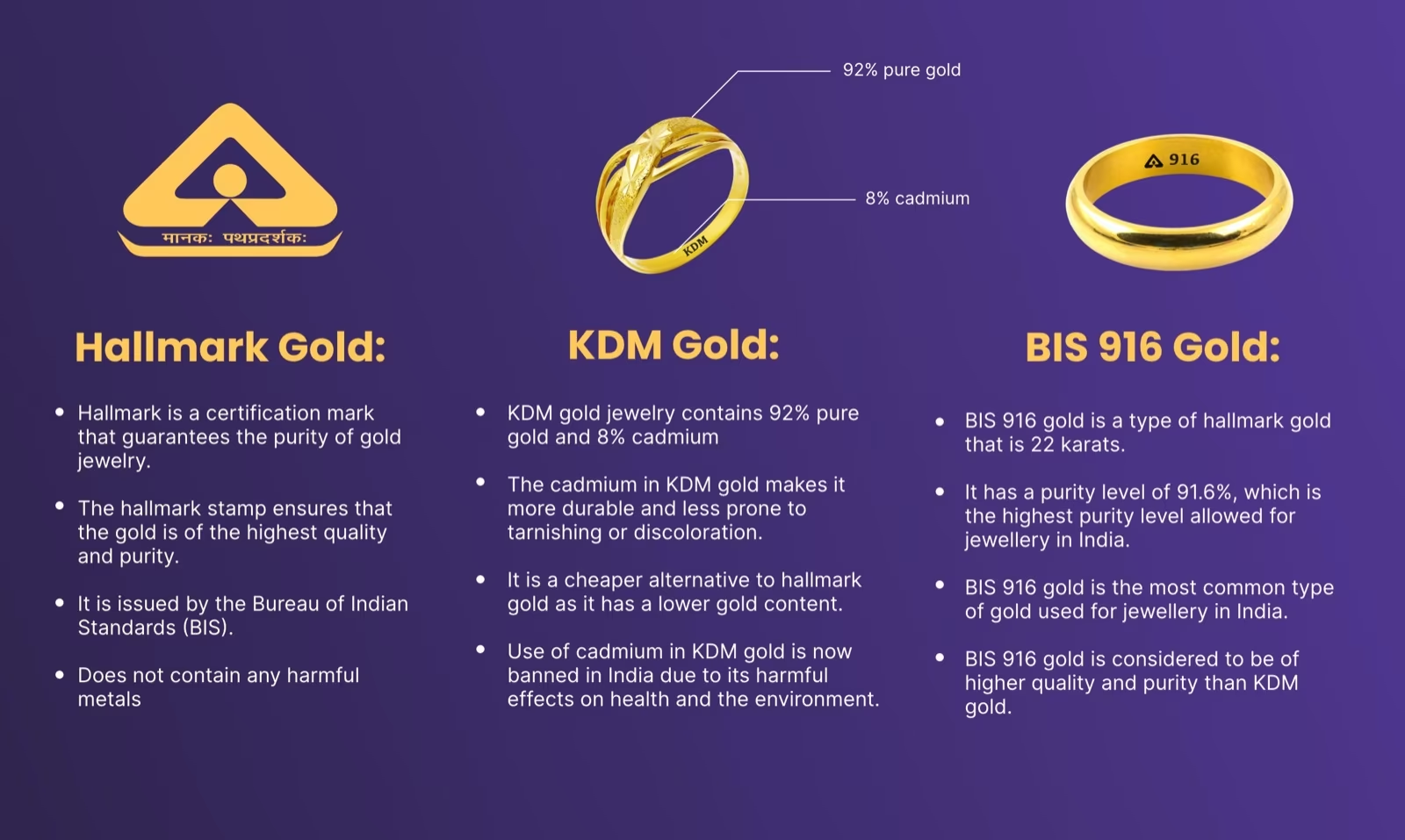
Hallmark Gold is gold jewellery that undergoes accurate determination and official recording of the proportionate content of precious metal in the jewellery. This process is called Hallmarking.
A hallmark is a mark or series of marks stamped by the official assay office to certify purity of Gold, information on manufacturer or sponsor and year of manufacturing.
The BIS is a government agency that sets the standards for gold purity in India, and any gold that meets these standards is given a hallmark stamp.
The hallmark stamp ensures that the gold is of the highest quality and purity, and it also indicates the weight and fineness of the gold. This process in which BIS stamps a certificate of purity and fineness on your gold, and this process is known as Hallmarking.
What is KDM Gold?
KDM stands for Karat Driving Machine and the gold made from this machine is mixed with ‘Kadmium’. KDM gold is an alloy for Cadmium and Gold mixed in a ratio of 91.6% gold and 8.4% cadmium. Cadmium is a good solder allowing artisans to make intricate designs.
To understand the use of Cadmium, we first need to learn a bit about jewellery making. Delicate designs on gold jewellery are intricate and beautiful, and their elegance is carved out through a process called ‘soldering’.
In soldering, two different metals (like gold and silver) are joined together with a filler metal called ‘solder’.
When choosing this filler metal, it is made sure that the melting point is lesser than that of gold — this is done to ensure that when the jewellery is melted, gold retains its purity.
One of the most common mixtures of metals used as a solder is cadmium and Gold. The melting point of cadmium 321.1 °C which is much lesser than Gold’s melting point (1064 °C).
KDM Gold does have certain benefits, but the Bureau of Indian Standards (BIS) has banned KDM gold from being circulated because it was found that cadmium was a hazardous metal, and working with it can hamper the health conditions of the artisans.
What is 916 Gold?
916 gold, also known as 22-Karat gold, is a type of gold used widely in making jewelry. 22-carat gold is called ‘BIS 916’ gold. The number 916 represents the purity of gold in the final product – 91.6% pure gold in a 100 gram alloy (a mixture of metals).
The purest gold (24 carat) is too soft to make intricate designs on jewellery. Therefore, alloys are used to make it hard, and designs are created using the 22-carat gold (BIS 916 gold).
That’s why, for the best purity, people generally opt for 22-carat gold ornaments rather than other varieties.
- Gold Purity: 916 represents the purity of gold in the final product – 91.6% pure gold in a 100 gram alloy
- Alloy Composition: The remaining 8.4% consists of other metals like copper, silver, zinc etc to add different characteristics for making jewelry. For example: adding zinc and silver will give a green hint to 22k gold to make green gold.
- Hallmarking: The hallmark may include ‘916’ or ‘22K’ for 22-karat pure gold.
- Usage: It is widely used in jewelry and is not primarily used for investment purposes.
Difference between Hallmark, KDM Gold and 916 Gold
| Attribute | Hallmark Gold | KDM Gold | 916 Gold |
| Certification | Hallmark is a certification mark that guarantees the purity of Gold Jewelry. | Traditionally used but not common as KDM is now banned in India due to health concerns. | 916 Gold is a type of hallmark gold that is 22 karats. |
| Purity | Certified Pure Gold | Contains Cadmium as soldering agent. | 91.6% Pure Gold |
| Usage | The hallmark stamp ensures that gold is of highest quality and purity. | The cadmium in KDM gold makes it durable and less prone to tarnish. | The most common type of gold used for jewelry in India. |
Types of Gold & their usage
| Types of Gold | Gold Purity | Characteristics | Usage |
| 24-Karat | 99.9% Gold | Soft and malleable | Suitable for investment and high-end jewelry |
| 22-Karat | 91.6% Gold | Durable, popular for jewellery | Crafting Jewelry and ornaments. |
| 18-Karat | 75% Gold | Balance between durability and purity | Crafting Jewelry, watches and other decorative items |
| 14-Karat | 58.3% Gold | Durable and affordable | Crafting jewelry |
| White Gold | Gold alloy with white metals | Looks like silver | Jewelry, ornaments and watches |
| Rose Gold | Gold alloy with copper | Has a warm and pinkish hue. It is durable, less prone to tarnish, and is scratch resistant. | Jewelry, watches, ornaments |
| Green Gold | Gold Alloy with Silver and Zinc | Shiny with green tint. Affordable. | Artistic Jewelry, ornaments |
| KDM Gold | Gold Alloy with Cadmium | Affordable and traditional in India | Intricate jewelry |
| Bullion Gold | Highest purity gold in gold bars and coins | Pure gold, soft and stored in vaults | Investment and wealth preservation. |
Is KDM real or fake?
It is real gold as it only contains 8.4% cadmium but it is banned in India due to health concerns so it cannot be openly sold or bought.
Why is KDM banned?
The Indian government, through the Bureau of Indian Standards (BIS), banned the use of cadmium in all types of jewellery.
According to 1417:1999 clause 6.2 of the BIS, hallmarking cannot be done on Cadmium soldered jewellery.
Cadmium, one of the primary metals used in KDM gold, was found to be toxic and can cause a range of health problems if ingested.
Cadmium can also be absorbed through the skin, which poses a risk to jewellers who work with KDM gold on a regular basis.
The ban was implemented after several studies showed that cadmium levels in jewellery made from KDM gold were higher than the permissible limit set by the BIS.
The ban was enforced and jewellers were required to adhere to the new regulations or face penalties.
Why was KDM Gold Popular?
KDM gold was a popular choice for jewellery in India because of its affordability, durability, and malleability.
Traditional Indian jewellery often features intricate designs and patterns, which require a high degree of skill and expertise to create.
KDM gold's malleability made it easier for jewellers to work with, allowing them to create intricate designs and patterns with greater ease.
Additionally, KDM gold's durability meant that jewellery made from this alloy would last longer and require less maintenance than jewellery made from other types of gold alloys.
Furthermore, the affordability of KDM gold made it accessible to a wider range of consumers.
Pure gold is often expensive, especially for lower-income families, but KDM gold price was an affordable alternative without compromising on the quality of the jewellery.
The Origins of KDM Gold
Gold jewellery is an intricate art form, which involves bending and reshaping gold into different forms to achieve a beautiful collection of jewellery that's available in the market.
In its pure form Gold (24 carat gold) cannot be reshaped into jewellery, as it is too soft for this purpose.
So a mixture of Gold and another metal is used for this purpose through the method of soldering. Soldering is a process in which high temperature is used to blend metals.
Hence it was important that the metal used along with Gold have a lower melting point than Gold.
Initially, the use of gold and copper alloys was popular for jewellery making. A composition of 60% Gold and 40% copper was used to create the alloy. It had certain advantages like ease of use but it had one big disadvantage.
The percentage of gold was less and the purity was reduced during the jewellery-making process due to impurities. Hence, you will find old jewellery's marked as 20/22 carat.
This paved the way for KDM gold as it allowed 92% of Gold to be used in alloys which ensured high-purity gold jewellery.
FAQs
Q) Is Hallmark 22 or 24 carat?
Answer - "Hallmark" itself doesn't refer to the specific carat of gold. Hallmark is a certification process and symbol that guarantees the purity of gold jewellery or items in India. However, hallmarked gold can come in different purities, including 22 carat and 24 carat.
It's important to always buy gold from a reliable jeweller who can provide you with a certificate of authenticity and purity. Additionally, look for the hallmark symbol to ensure you're getting the gold purity you paid for.
Q) Which is better KDM gold or Hallmark?
The answer to whether KDM gold or Hallmark gold is "better" depends on what you prioritize: purity and resale value or increased durability.
- If purity and resale value are your top priorities, go for Hallmark gold.
- If you prioritize strength and durability and are comfortable with slightly less purity and potential health concerns about outdated KDM alloys, KDM gold might be an option (though verify if newer, safer alloys are used).
Remember, KDM gold is not officially recognized in India anymore due to the cadmium issue. You might encounter jewelers using the term loosely for different alloys, so always ensure you understand the specific alloy composition and potential risks before buying.